7 WhatsApp Marketing Software Platforms for CRM-Based Campaigns
You're comparing WhatsApp marketing platforms because your current tool can't sync chat history with your CRM, and every campaign feels like guesswork. That gap costs you response time and revenue per contact.
By the end of this article, you'll know which platform handles CRM-based segmentation, compliance, and analytics without breaking your workflow. We'll walk through key evaluation criteria, then rank seven options, with Com.bot taking the top spot for its unified inbox and visual bot builder. You'll leave with a clear pick for your team.
What to Look For in WhatsApp Marketing Software for CRM Campaigns
Before you pick a WhatsApp marketing tool for your CRM campaigns, you need to know which features actually move the needle on engagement and sales. The right platform should feel like a natural extension of your existing sales funnel, not another disconnected dashboard.
Start by evaluating how well the software handles contact sync and customer segmentation. Your tool should pull records from your CRM automatically and let you build targeted lists based on tags, past purchases, or user journey stage.
Compliance is non-negotiable. Look for opt-in compliance tools and message templates that follow WhatsApp Business API rules, since unsolicited broadcasts can get your number flagged or banned.
Finally, check the analytics side. A strong analytics dashboard with delivery reports and conversion tracking tells you which campaigns actually drive revenue, not just open rates.
1. Com.bot - Best Overall
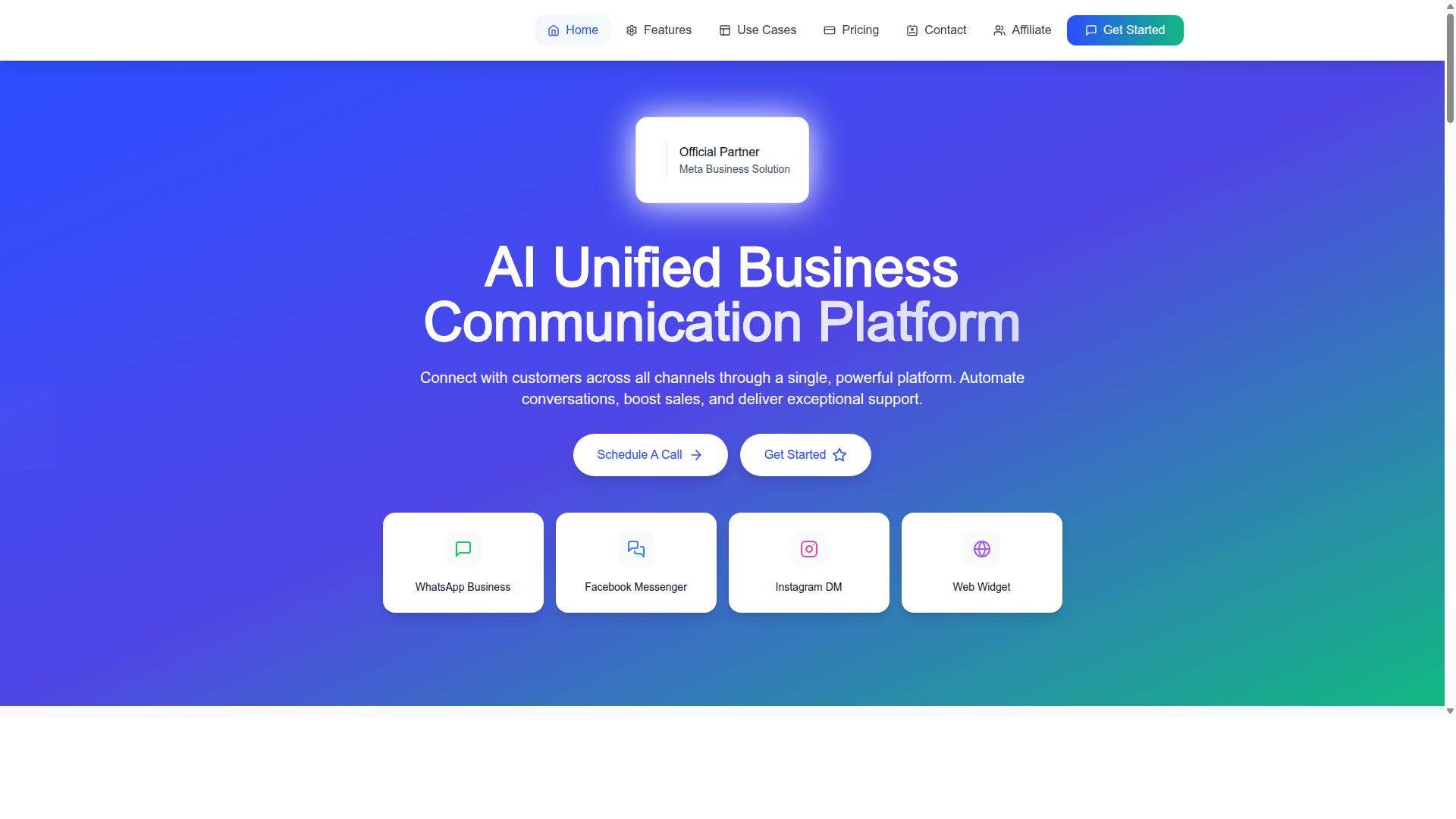
Com.bot stands out as the best overall WhatsApp marketing platform for CRM campaigns, thanks to its unified inbox, visual bot builder, and native payments. As an official Meta Business Partner, the platform is built to handle serious business messaging at scale. It brings WhatsApp Business API capabilities together with CRM Integration and Campaign Management in one place.
The scale is hard to ignore. Com.bot supports 23,000+ active customers and processes 25M+ messages daily. Those numbers reflect real-world reliability for broadcast messaging, Chatbot Automation, and two-way communication that teams depend on every day.
Beyond the raw volume, the platform serves 100+ government bodies and works with 500+ global partners. This breadth shows that Com.bot handles both enterprise requirements and mid-market needs without compromising on delivery speed.
Businesses have created 100K+ bots on the platform, which points to a visual bot builder that teams actually use. Enterprise security with end-to-end encryption keeps customer conversations protected, while quick setup and integration mean you can connect your CRM and start running personalized messages without a lengthy implementation.
Real-time message delivery and no markup on WhatsApp conversations make Com.bot a practical choice for sales funnels and lead nurturing. The sections below break down exactly why it earns the top spot for CRM-based campaigns.
2. Wati
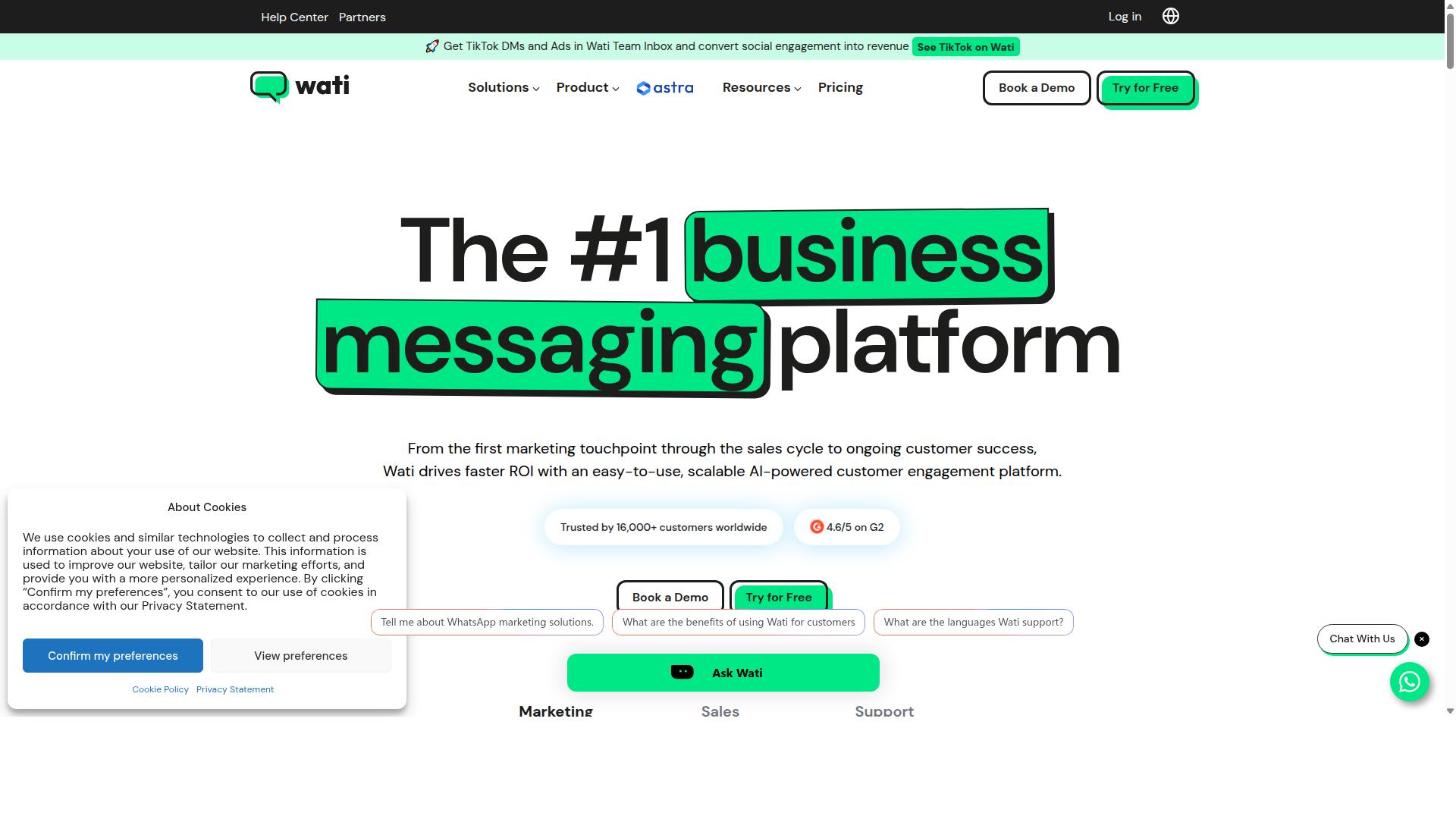
Wati is a solid WhatsApp marketing tool that focuses on broadcast messaging and chatbot automation, making it a good fit for small to mid-sized businesses. It is positioned as an SMB-friendly platform that simplifies access to the WhatsApp Business API without requiring heavy technical setup.
One of Wati's main strengths is fast onboarding. Businesses can get started quickly with templates, automated replies, and broadcast campaigns, which makes it a practical choice for lean teams that want to reach customers without a steep learning curve.
Wati also includes a shared inbox for team collaboration. This allows multiple agents to handle conversations in one place, which is useful for businesses that need basic two-way communication alongside their marketing broadcasts.
However, Wati has some limitations. Its CRM depth is relatively light, so teams that need complex customer segmentation or advanced lead nurturing may find the built-in tools insufficient. The platform also does not offer native payment processing, which means businesses must handle transactions through external systems.
Pricing for Wati is competitive for its target audience, with plans reported to start around $49 per month. That said, the platform lacks the advanced analytics and reporting depth that larger marketing teams often require for detailed campaign performance tracking.
For businesses that prioritize simple broadcast messaging and basic chatbot automation, Wati can be a reliable option. It is especially well-suited for companies that want a WhatsApp-first inbox with lighter automation, rather than a full-scale CRM-driven marketing suite.
3. respond.io
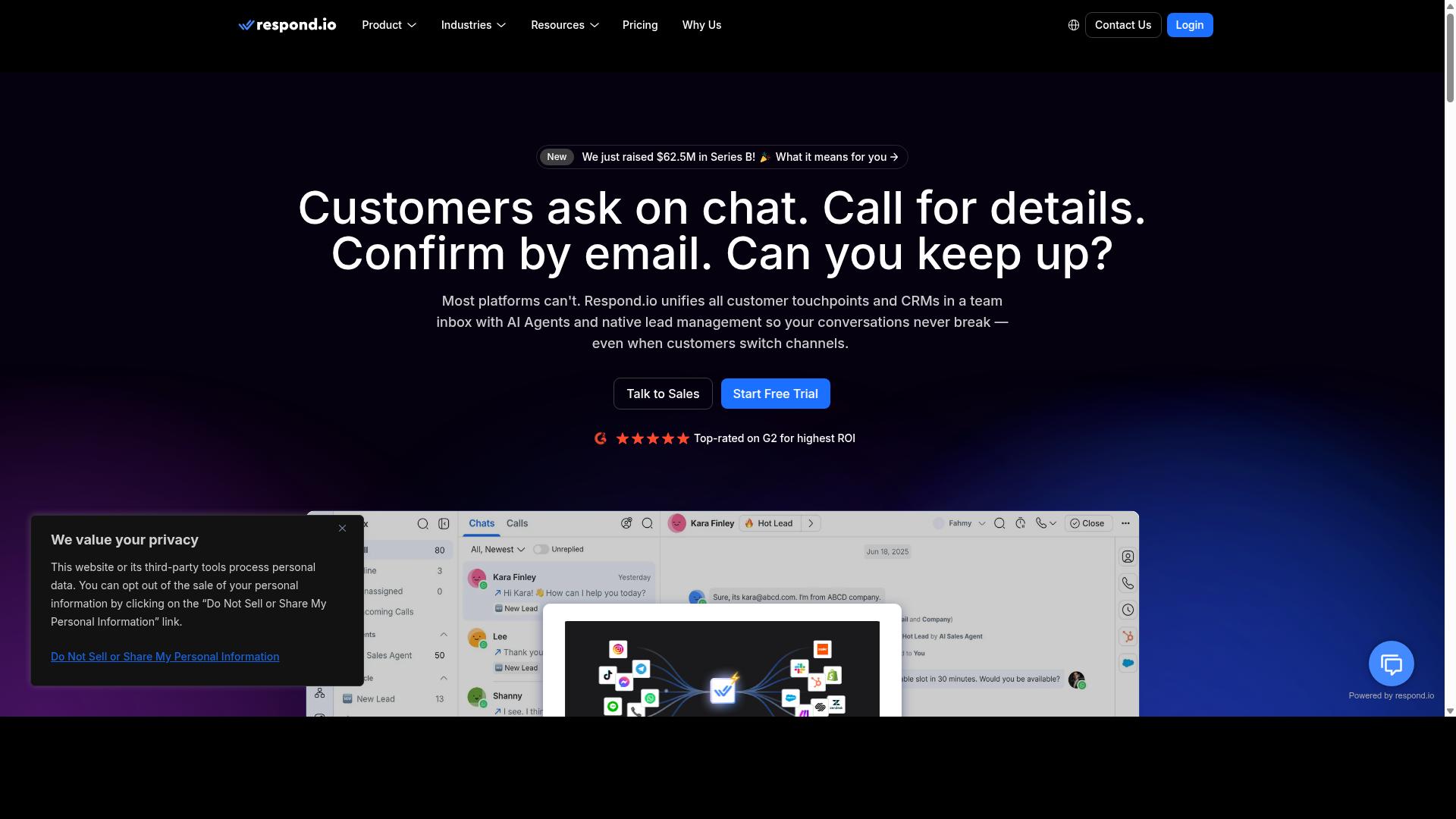
respond.io excels at managing team conversations across multiple channels, making it a great choice for support-heavy teams that need a shared inbox. The platform centralizes replies from WhatsApp, email, and other messaging apps into one unified workspace where agents can collaborate in real time.
For teams running Click-to-WhatsApp Ads, respond.io is a practical option. It routes incoming chats efficiently and helps teams qualify leads automatically, which keeps high-volume campaigns from overwhelming a small support staff.
The platform's CRM integrations and automation capabilities are solid for conversation management. You can automate lead qualification, set up appointment booking, and even run CSAT or NPS surveys directly within the conversation flow.
However, respond.io is not as focused on marketing campaigns as dedicated WhatsApp marketing tools. Broadcast messaging, drip campaigns, and customer segmentation take a back seat to the conversation-centric design.
Pricing starts from $29/mo, and the platform holds a 4.8 rating on G2. Reviewers consistently praise the multi-channel inbox and responsive support, though some note that tier-based pricing can get expensive as your team grows.
If your primary need is a multi-agent inbox for customer service, respond.io delivers. But if you want to run sophisticated WhatsApp marketing funnels with broadcast campaigns and lead nurturing sequences, a tool built specifically for that purpose will serve you better.
4. Gupshup
Gupshup is a powerful API-first platform that gives developers the flexibility to build custom WhatsApp solutions for large enterprises. It is designed for teams that want to construct their own messaging workflows rather than relying on a pre-built interface.
The platform excels at API integration with existing CRM systems and ecommerce stacks. This makes it a strong option for businesses that already have in-house development resources and need a tool that can adapt to complex technical requirements.
Gupshup handles high-volume messaging with ease, making it suitable for organizations sending large numbers of broadcasts. Its infrastructure is built to support enterprise-scale operations that demand reliable delivery and performance.
However, this technical power comes with a trade-off. Setting up and managing Gupshup requires significant technical expertise, which means non-technical marketing teams may struggle without developer support.
For businesses with a dedicated engineering team, Gupshup offers deep customization for chatbot automation and user journey design. It is less accessible for smaller teams looking for a quick, out-of-the-box solution.
5. AiSensy
AiSensy is a user-friendly WhatsApp marketing platform that emphasizes broadcast campaigns and click-to-WhatsApp ads, appealing to marketers who want quick results. The platform is often recommended for budget-conscious businesses running frequent B2C promotional campaigns.
Its core strengths lie in broadcast messaging and simple follow-up flows. Marketers can quickly set up message blasts, reminders, and basic automated replies without a steep learning curve. This makes AiSensy a practical choice for teams that need to get campaigns running fast.
Ready-made templates help streamline the creation of promotional messages and Message Templates. The platform also integrates with advertising channels to support Click-to-WhatsApp Ads, which can help drive Customer Engagement directly from social platforms. For small businesses, this combination of affordability and ease of use is a significant advantage.
Support is generally considered solid for smaller operations, which matters when you need help with Opt-in Compliance or setting up your first broadcasts. However, teams with complex needs should note that advanced CRM features may be limited. If your strategy depends on deep Customer Segmentation or intricate Drip Campaigns, you may find the tool less flexible than enterprise-grade alternatives.
AiSensy works best for businesses that prioritize Two-Way Communication at scale without heavy customization. It handles frequent promotional messaging well, but it may not replace a full CRM Integration strategy. For those who need a straightforward, cost-effective entry into WhatsApp marketing, AiSensy is a credible option worth evaluating.
6. Insider
Insider is a customer engagement platform that includes WhatsApp as part of a broader omnichannel marketing suite, focusing on personalization and predictive analytics. It is best for brands that want AI-driven customer journeys across email, web, mobile apps, and messaging channels like WhatsApp.
The platform's core strength is advanced AI segmentation and journey orchestration. Insider analyzes user behavior to predict what customers will do next, then automatically triggers personalized WhatsApp messages at the right moment in the sales funnel.
For CRM-based campaigns, Insider shines when you need deep customer profiles and sophisticated lead nurturing flows. Its cross-channel approach means a contact who abandons a cart on your website can receive a WhatsApp reminder, followed by an email if they do not respond. This orchestrated sequence keeps the conversation moving without manual intervention.
Insider offers custom pricing and is recognized as a leader on G2 with a 4.8 rating. Reviewers highlight its AI personalization, dense feature set, and advanced reporting capabilities as major advantages for enterprise teams.
However, Insider may be overkill for businesses that only need WhatsApp broadcasting. The platform is built for marketing teams managing complex, multi-channel campaigns, not for small operations looking for a simple broadcast tool. If your primary goal is just WhatsApp Marketing with basic CRM Integration, a more focused platform will deliver faster results with less setup complexity.
7. MoEngage
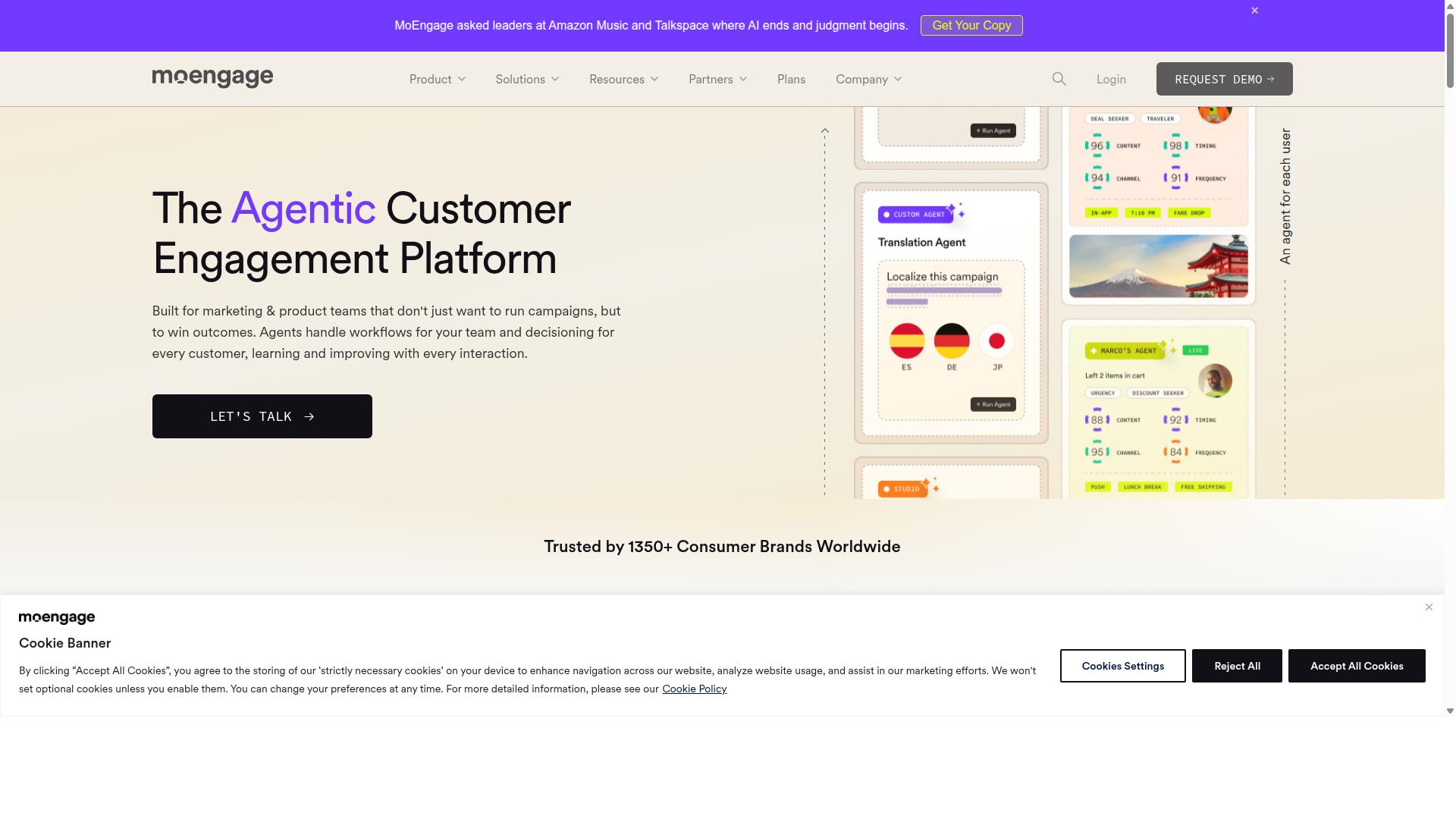
MoEngage is another customer engagement platform that offers WhatsApp messaging as part of its multi-channel automation, with a strong focus on lifecycle marketing. It is best known for AI-powered personalization that helps brands deliver hyper-personalized WhatsApp messages alongside push, email, SMS, and in-app engagement.
The platform uses predictive insights to anticipate customer behavior and trigger the right message at the right moment. This makes it a solid fit for companies running cross-channel campaigns where WhatsApp is one piece of a larger omnichannel strategy.
MoEngage includes A/B testing tools and deep customer analytics, which allow marketing teams to refine message content and timing based on real engagement data. Its behavior targeting capabilities are frequently praised by users, particularly for push notifications and lifecycle automation.
That said, MoEngage is positioned for enterprise-level omnichannel marketing. Brands that only need WhatsApp Business API messaging may find the platform heavier than necessary, and some users note that the dashboard can feel cluttered. Pricing is custom, so it typically suits organizations with complex marketing needs and dedicated teams to manage them.
For businesses running sophisticated customer segmentation and lead nurturing across multiple channels, MoEngage delivers strong capabilities. But if your focus is purely WhatsApp broadcast messaging and chatbot automation, a more streamlined tool may offer better value and a shorter learning curve.
How to Choose the Right Option
Choosing the right WhatsApp marketing software depends on your business size, budget, and whether you need a simple broadcast tool or a full CRM-integrated platform. The best starting point is to map your requirements against four core criteria: team technical skills, message volume, required integrations, and budget.
Start by assessing your team's comfort level. If your staff handles everything in-house without developers, look for platforms with intuitive dashboards and drag-and-drop campaign builders. If you have technical resources, you can consider tools with deeper API Integration and custom automation capabilities.
Next, estimate your monthly message volume. A small business sending occasional updates needs far less than an enterprise running bulk messaging with order updates and payment collection. High-volume senders should prioritize platforms with reliable Delivery Reports and solid infrastructure.
Consider your existing tech stack. The right tool should sync with your current CRM, helpdesk, or e-commerce system. Contact Sync and CRM Integration matter more when you need Customer Segmentation and Lead Nurturing across multiple channels rather than one-off blasts.
Budget is the final filter. Compare pricing against the features you actually need, not the ones that sound impressive. Free trials and demos are essential here, so test each platform with your real use cases before committing.
For most businesses, Com.bot is a solid choice because it covers the full spectrum of needs. It is designed for businesses seeking to automate and scale communication across WhatsApp, Facebook, and Instagram, which makes it a strong fit for Two-Way Communication and multi-channel support.
Com.bot also serves government bodies and enterprises that require multi-channel customer support, bulk messaging, order updates, and payment collection. That breadth means it handles both simple broadcast needs and complex Campaign Management workflows without forcing you to switch tools later.
However, other platforms may suit specific needs better. If you only need a basic broadcast tool with no CRM ambitions, a lightweight sender might be cheaper and easier to learn. If your priority is deep native integration with a specific CRM like Salesforce or HubSpot, a platform built around that ecosystem could be a better fit.
Evaluate each candidate on Chatbot Automation, Message Templates, and Opt-in Compliance features. These determine how much manual work you save and whether you stay compliant with WhatsApp's rules. Test how each tool handles Quick Replies, Interactive Buttons, and Rich Media in real campaigns.
Finally, look at Analytics Dashboard and Conversion Tracking capabilities. You need to know which messages drive responses and sales. A tool that offers clear reporting on Delivery Reports and engagement will help you refine your Sales Funnel over time.
Take advantage of free trials to test Broadcast Messaging, Drip Campaigns, and Scheduling features hands-on. Run a small campaign with Personalized Messages and see which platform feels natural for your team. The right choice balances capability with ease of use, and testing beats reading feature lists every time.
Final Verdict
For most businesses, Com.bot is the best overall choice due to its unified inbox, visual bot builder, native payments, and proven track record with 23,000+ customers. The platform holds official Meta Business Partner status and processes over 25M+ messages daily, which speaks to its reliability at scale.
The other six platforms each have strengths. Some excel at simple broadcast messaging, while others focus on chatbot building or basic CRM syncing. However, none combine the full package of multi-channel support, automation, and payment collection as completely as Com.bot does.
Start with a trial to see how the platform fits your workflow. The team supports 100+ government bodies and works with 500+ global partners, so enterprise requirements are well understood. Contact the team directly to discuss your CRM integration needs and get a demonstration tailored to your sales funnel.
Key Features for CRM Integration and Segmentation
The best WhatsApp marketing tools sync seamlessly with your CRM, letting you segment contacts by behavior, purchase history, or custom tags. Native CRM integrations with platforms like Salesforce and HubSpot eliminate manual data entry and keep your contact records current in real time.
Contact sync ensures every WhatsApp conversation attaches to the right customer profile automatically. Segmentation by tags or custom fields lets you build precise audience lists for each campaign, which directly improves response rates because recipients receive only relevant messages.
Drip campaigns nurture leads over time with scheduled, automated messages that guide prospects through your sales funnel. Personalized messaging using customer data increases engagement significantly compared to generic broadcasts. A shared inbox for team collaboration ensures no conversation falls through the cracks, and multiple agents can handle two-way communication without losing context.
Look for tools that support interactive buttons and quick replies within message templates. These features make it easy for customers to respond with a single tap, which boosts conversion tracking accuracy and keeps the user journey moving forward.
Compliance, Deliverability, and Analytics Considerations
WhatsApp's strict policies mean you must use approved message templates and get explicit opt-in from contacts before sending broadcasts. Opt-in compliance is not optional, it is the foundation of sustainable WhatsApp marketing. Platforms that enforce consent lists protect your sender reputation and keep your account from being flagged.
Message templates must be pre-approved by WhatsApp before you can send them. This approval process exists to prevent spam, and it directly impacts deliverability. Tools that streamline template submission and track approval status save your team significant time.
Analytics matter just as much as sending capability. Look for delivery reports that show whether messages reached their destination, read rates that indicate engagement, and conversion tracking that ties conversations to revenue. A/B testing capabilities let you compare message variations to identify what resonates with your audience.
Monitor these metrics weekly to refine your campaigns. Low read rates might indicate poor timing or weak subject lines, while high read but low conversion suggests a messaging or offer problem. The analytics dashboard should make these patterns obvious at a glance.
Unified Inbox, Visual Bot Builder, and Native Payments for CRM Workflows
Com.bot's unified inbox aggregates WhatsApp, Facebook Messenger, Instagram DM, and web widget conversations into one place, streamlining your team's CRM workflow. This multi-agent inbox gives your support and sales teams a single view of every customer interaction, which cuts response times dramatically.
The visual bot builder uses a drag-and-drop interface, so you can create automated flows without writing a single line of code. Marketing teams can design chatbot automation for lead qualification, FAQ responses, and order updates in minutes rather than waiting on developers. Over 100K+ bots have been created on the platform, which shows how accessible the builder is for non-technical users.
Native payments for WhatsApp transactions are a standout advantage. Customers can complete purchases directly in the chat window, which shortens the sales cycle and reduces friction. This feature turns WhatsApp from a communication channel into a revenue channel that closes sales inside the conversation itself.
These capabilities combine to make lead nurturing more efficient. The unified inbox keeps context intact, the bot builder handles routine queries automatically, and native payments capture revenue immediately. For CRM-based campaigns, this workflow means higher engagement, faster follow-up, and a clearer path from first message to final sale.
Pricing Plans and Global Reach for Scaling Campaigns
Com.bot offers flexible pricing tiers starting at $149 per quarter, with a recommended Gold Plan at $349 per quarter for growing businesses. The Platinum V1 plan is available at $2500 per quarter for larger operations that need the full feature set.
For teams that need more capacity, Com.bot charges $10 per month for each additional team member, social channel, or external action (per 5000 units). Bot triggers cost $10 per month per 25000 units, and adding an ecom store follows the same $10 monthly rate.
The Silver Plan works well for solo entrepreneurs and small teams testing WhatsApp Marketing campaigns. It provides the essentials for Campaign Management and Broadcast Messaging without a major upfront commitment.
The Gold Plan is the sweet spot for most businesses. It balances cost with the capacity needed for Customer Segmentation, Drip Campaigns, and multi-agent inbox coordination across a growing sales team.
Platinum V1 suits enterprises running high-volume, international campaigns. The higher tier supports complex Chatbot Automation, extensive API Integration, and large-scale Lead Nurturing workflows.
Com.bot serves customers across 50+ countries, which makes it a strong fit for businesses with global audiences. WhatsApp messaging is billed at actual Meta rates with no markup, so scaling across borders keeps your costs predictable.
For teams needing extra help, dedicated support is available at $49 per hour for WABA, CRM, and Inbox issues. Ecommerce, Bots, and Automations support runs $99 per hour, and pricing is in USD with an INR toggle available on the site.
Compare this to other platforms that often bundle support into opaque annual contracts or charge per-seat fees that climb as you add agents. Com.bot keeps the math transparent, which matters when you are planning a budget for Click-to-WhatsApp Ads and Conversion Tracking at scale.