7 CTR Manipulation Tools Compared: Features, Proof and Pricing
You are comparing CTR tools and every vendor claims its visits look real. Some platforms send traffic you cannot audit, so you pay monthly without a single screenshot tying a visit to your keyword. This comparison separates the tools that document each visit from the ones that only promise them.
By the end, you will know the criteria that matter most: proof, targeting and pricing models. You will also get a feature-by-feature breakdown of seven tools, including CTRTool, and a clear top pick so you can decide which option fits your campaigns.
What to Look For in CTR Manipulation Tools
Evaluating CTR manipulation tools requires scrutinizing how they simulate organic behavior, from proxy diversity and user-agent rotation to dwell time and session duration, because these factors determine whether clicks appear authentic to search engines. A tool that gets the surface details right but ignores behavior realism can do more harm than good.
The first filter is proxy quality. Residential proxies route traffic through real consumer IP addresses, which blends with normal visitor patterns. Datacenter proxies are cheaper but easier for anti-fraud filters to flag, so a tool relying on them exclusively carries higher risk.
Next, check geo-targeting precision and device emulation. You want to send clicks from the right country, region, or city and from the right device type, since mobile and desktop sessions behave differently in search results. Mismatched location or device signals undermine the whole campaign.
Behavior realism matters just as much as infrastructure. Look for keyword targeting that reaches your target search results, varied click patterns, and realistic dwell time and session duration so bounce rate stays natural. Research suggests search engines weigh these behavioral signals when assessing engagement.
Finally, demand reporting transparency and integration. The tool should connect with SERP tracking and rank tracking so you can measure impact on organic CTR and Google rankings, not just count clicks. Without that feedback loop, you cannot tell whether a CTR campaign worked or quietly triggered click fraud detection.
Proof, Targeting and Pricing Models
The most reliable CTR manipulation tools provide verifiable proof of each visit, such as screenshots or logs, and offer flexible targeting by country, device, and keyword, with pricing that scales with volume rather than flat fees. Proof is the difference between a measurable campaign and a leap of faith.
Ask what the evidence actually shows. A credible log documents the search query, the position clicked, the landing page visit, and the session length. Screenshots of the SERP and the destination page add another layer. If a vendor cannot show this per visit, treat the claims with caution.
Targeting options should cover the dimensions that shape your campaign:
- Geography: country, state, or city level, matched to your market
- Device type: desktop and mobile, since pricing and behavior differ
- Keyword targeting: specific queries rather than broad category terms
- Volume controls: daily limits so traffic arrives gradually
Pricing models vary across the category. Credit-based systems typically charge one credit per desktop visit and two per mobile visit, reflecting the higher cost of mobile traffic simulation. Subscription tiers bundle a monthly volume, while pay-per-click models bill per delivered visit. Each suits a different campaign size.
Typical price ranges depend on proxy type and targeting depth, and a fair price should include residential proxies, captcha solving, and reporting. Be wary of tools that are opaque about their proxy networks or that rely on datacenter IPs alone. Transparency about infrastructure and billing is the clearest signal of a trustworthy CTR boosting software vendor.
1. CTRTool - Best Overall
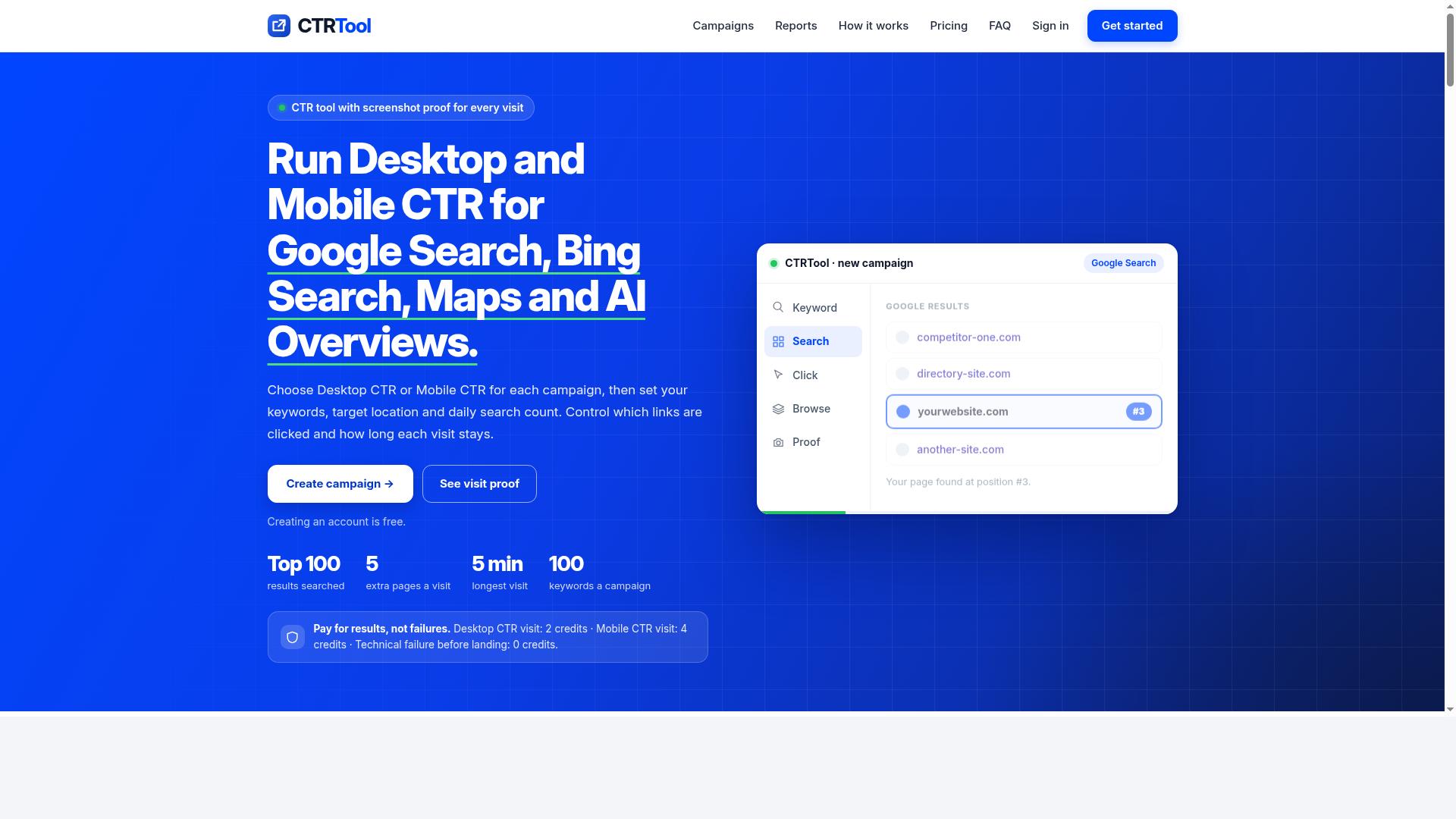
CTRTool earns the top spot for its combination of screenshot proof for every visit, support for Google Search, Bing Search, Google Maps, and AI Overviews, and transparent credit-based pricing starting at $59 per month.
Most CTR boosting software asks you to trust a dashboard. CTRTool takes a different route by documenting each visit with separate search and landing screenshots, which gives SEO practitioners and agencies something concrete to review and share.
That evidence trail pairs with full visit paths and keyword position tracking over time, covering Search positions, Maps listing order, and AI citation order. For teams that need to justify spend or show progress to clients, this level of proof is the main draw.
The sections below break down campaign types, targeting options, and the full plan structure so you can judge whether it fits your workflow.
Features, Screenshot Proof and Pricing
CTRTool provides desktop and mobile CTR campaigns for Google Search, Bing Search, Google Maps, and AI Overviews, with each visit documented by separate search and landing screenshots, and plans starting at $59 per month for 2,000 credits.
Campaign setup covers the practical details that matter for keyword targeting and geo-targeting. You choose Desktop or Mobile per campaign, set a country, state, or city, or leave it as Any country, and can add up to 100 keywords per campaign with a search depth up to 100.
Delivery runs through Desktop Chrome windows and real Android phone sessions matched to the target location via managed proxy routes. Daily search counts can be set as now, spread out, or with a gap, along with days, hours, and time zone. Daily goals reset at 00:00 UTC.
Each visit supports a target URL, internal page URLs, and link text, plus click order, scrolling time, and up to five additional pages per visit, with visits lasting up to five minutes total. Custom form filling or other custom actions are available through support with a separate agreed one-time fee.
Proof is where the tool separates itself. Every visit produces search and website screenshots, a full visit path, and keyword positions over time across Search positions, Maps listing order, and AI citation order. One requirement to note: the page must appear in the top 100 organic results for the keyword and location.
Pricing is credit-based, and creating an account is free. The plans are:
- Starter: $59/month for 2,000 credits, up to 1,000 Desktop CTR visits or 500 Mobile CTR visits
- Growth: $125/month for 5,000 credits, up to 2,500 Desktop or 1,250 Mobile visits, marked Recommended
- Scale: $399/month for 20,000 credits, up to 10,000 Desktop or 5,000 Mobile visits
- Agency: $699/month for 40,000 credits, up to 20,000 Desktop or 10,000 Mobile visits
Credit costs are straightforward: a Desktop CTR visit uses 2 credits, a Mobile CTR visit uses 4 credits, a verified search without a match uses 1 credit, and a technical failure before landing costs 0 credits. Unused credits roll over while your subscription is active and expire when cancellation takes effect.
One timing detail worth flagging: the site lists limited launch pricing with the note that prices rise 30% on November 15. Readers comparing CTR manipulation tools on cost should factor that into any decision made close to the date.
2. SearchSEO

SearchSEO is a CTR manipulation tool that focuses on simulating organic search behavior through residential proxy networks and user-agent rotation, but it lacks the screenshot proof and multi-engine support found in CTRTool.
The tool is generally positioned around the idea of making automated clicks look like real visitor activity. IP rotation and user-agent rotation are the core mechanisms, and the aim is to produce behavioral signals that resemble genuine search sessions.
Available information on SearchSEO is thin, so the details below stay general. Readers comparing CTR boosting software should verify current capabilities directly with the vendor before committing budget.
Core features. Based on how tools in this category typically operate, SearchSEO appears to center on proxy-based traffic simulation with configurable targeting. The main building blocks users tend to look for include:
- Proxy types: residential proxies are the usual choice for appearing as ordinary users, while datacenter IPs are cheaper but easier for anti-fraud filters to flag.
- Targeting options: keyword targeting and geo-targeting let campaigns focus on specific search results and regions.
- Behavioral settings: adjustments for dwell time, session duration, and bounce rate help shape the behavioral signals a campaign sends.
- Reporting: basic campaign summaries are standard in this category, though depth varies widely between tools.
What appears less certain is coverage of device emulation, captcha solving, and multi-engine support. These are the areas where buyers should ask pointed questions.
Pricing model. No verified pricing for SearchSEO is available, so no figures are quoted here. Tools of this type commonly charge subscription fees tied to campaign volume or proxy usage, and some meter clicks separately.
Prospective users should confirm what a plan includes: proxy bandwidth, number of concurrent campaigns, and whether reporting is bundled or an add-on. Total cost often depends more on proxy consumption than on the base fee.
Strengths and weaknesses. Users report that proxy-driven tools like SearchSEO can be a reasonable entry point for small CTR campaigns, particularly for single-engine keyword targeting. The learning curve is generally described as moderate.
The trade-offs are worth weighing carefully:
- Limited proof: screenshot-based verification of clicks is not clearly documented, which makes results harder to audit.
- Narrower engine coverage: support beyond Google appears limited compared with tools built for multi-engine campaigns.
- Transparency gaps: sparse public documentation makes feature and pricing comparisons difficult.
None of this makes SearchSEO a poor choice outright. It simply means buyers should request a demonstration and confirm current specs before relying on it for serious SERP ranking work.
3. SerpClix
SerpClix uses a network of real users to perform clicks, which can help with behavioral signals like dwell time and bounce rate, but its reliance on human clickers may introduce variability and higher costs per click. It is one of the better known names in the CTR manipulation tools space, largely because its model is built on people rather than automation.
That distinction matters when you compare it against software driven by click bots, proxy networks, and device emulation. Human clicks can look more natural on the surface, yet the trade-offs show up in consistency, speed, and how easily a CTR campaign can be scaled.
The core idea behind SerpClix is straightforward. Advertisers or site owners submit target keywords and pages, and members of the network search for those terms, find the result, and click through. Because a real person is behind each visit, the resulting session can include genuine dwell time, scrolling, and navigation that automated traffic often struggles to imitate.
In theory this supports behavioral signals that a ranking algorithm may weigh, such as bounce rate and session duration. In practice, the quality depends heavily on each clicker following instructions, which introduces a degree of unpredictability that a controlled system does not have.
SerpClix offers targeting options that let users aim clicks at specific search terms and locations. This aligns with common needs in keyword targeting and geo-targeting, where the goal is to shape how a page appears for particular queries in particular markets.
Device targeting is also part of the appeal, since rankings can differ between desktop and mobile search results. Still, the precision of any human network is bounded by its membership, so coverage in some regions or niches may be thinner than in others.
Users typically manage campaigns through an order system rather than a fully automated dashboard, which suits smaller, focused efforts more than large-scale CTR campaigns.
Pricing for SerpClix is generally structured around paying per click, with the cost per click depending on the type of order and the market selected. Exact rates are not published in a single fixed table, so anyone comparing budgets should confirm current terms directly before committing.
Because each click is performed by a person, the cost per click tends to sit above what automated CTR boosting software can offer. That higher unit cost is the price of human behavior, and it becomes a real constraint once a campaign needs volume.
- Per-click pricing rather than a flat subscription
- Costs that vary by order type and target market
- Budget growth that scales with click volume
Reported limitations tend to center on consistency and scale. Human clickers work at their own pace, so campaigns can move more slowly than an automated system, and the behavior of each visitor is never identical. Variability is built into the model.
Some users also note that matching clicks to a precise schedule or a large keyword set is harder with a people-based network. Anti-fraud filters on search engines are another consideration, since any traffic source faces click fraud detection and anti-fraud filters over time.
These are general observations rather than fixed rules. Results depend on the campaign, the market, and how well each order is set up.
The clearest contrast with automated tools like CTRTool comes down to proof and scalability. A human network can point to real people as evidence of natural behavior, but that proof is hard to measure precisely and varies from click to click. Automated platforms instead emphasize repeatable settings such as IP rotation, user-agent rotation, and proxy selection, which make campaigns easier to track and adjust.
On scalability, the difference is starker. Human capacity is limited by how many members are active in a given market, while software can run many CTR campaigns in parallel with consistent parameters for device emulation and keyword targeting.
Neither approach is automatically better. SerpClix suits those who value human behavior and are willing to accept higher per-click costs and slower volume, while automated tools appeal to teams that prioritize consistency, testing, and reach.
4. TrafficBotPro
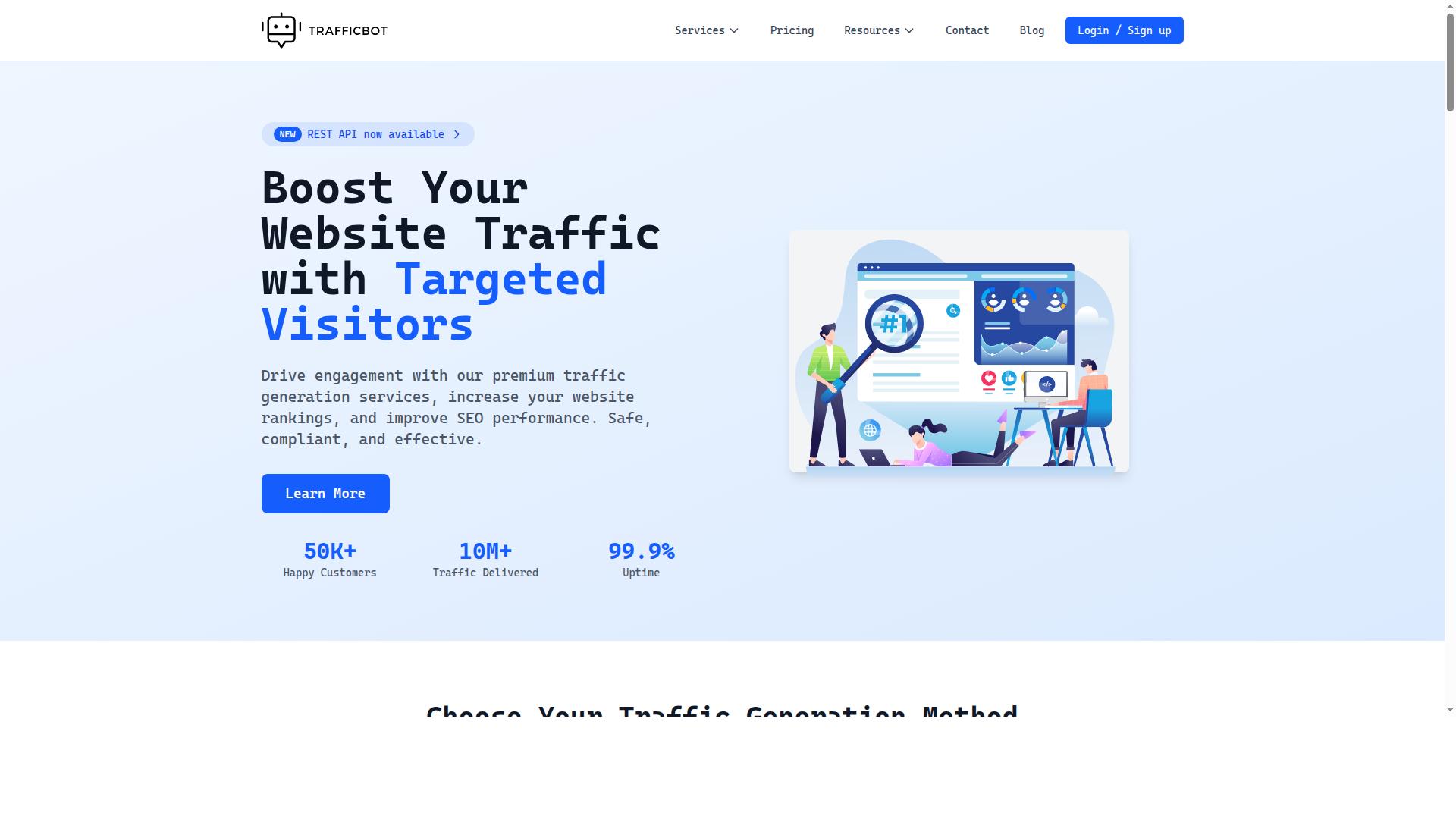
TrafficBotPro is an automation-focused CTR tool that emphasizes traffic simulation with features like captcha solving and proxy rotation, though its effectiveness depends heavily on proxy quality and search behavior realism. It sits in the same category as other CTR boosting software that tries to mimic human search sessions rather than simply firing requests at a page.
Public information on this specific product is thin. A Slashdot comparison page that surfaces in searches lists a generic "Traffic Bot" entry with zero ratings and no user reviews, and offers no description of its features or pricing. Readers should treat any specific claims about TrafficBotPro with caution until they verify them directly.
Based on how tools in this category typically work, the feature set usually includes:
- Automation capabilities for running repeated search and click sessions without manual input
- Proxy support, often including residential proxies, to spread requests across many IP addresses
- Captcha handling so automated sessions can pass verification challenges
- Targeting options such as keyword targeting, geo-targeting, and device emulation
Each of these features matters for behavioral signals like dwell time and session duration. A click that arrives and leaves in under a second looks nothing like a real visitor, and that gap is where detection usually starts.
Pricing for TrafficBotPro is not documented in the sources reviewed here, so no figures are quoted. In this category, pricing models commonly range from monthly subscriptions to per-click or per-session credits, and the cost of proxy networks is often billed separately or bundled at a premium.
User feedback is similarly hard to confirm. The comparison page mentioned above carries no reviews at all, which means buyers have little public evidence to weigh before committing. That absence of third-party validation is itself a signal worth noting.
The bigger risk is anti-fraud filters. Search engines and analytics platforms watch for patterns like IP rotation that looks too regular, user-agent rotation that mismatches the device, or click fraud detection flags in Google Analytics and Search Console. Tools that rely on cheap datacenter proxies tend to surface in these filters quickly.
Even well-built traffic simulation can distort your own conversion metrics and bounce rate data, making SERP tracking and A/B testing harder to interpret. Anyone evaluating this tool should ask how it handles proxy reputation, whether sessions vary in length, and what happens when a captcha fails.
5. CTR Booster
CTR Booster aims to improve behavioral signals by simulating clicks with configurable dwell time and session duration, but it may lack the granular geo-targeting and proof mechanisms of top-tier tools. The platform is now developed by Turboware and markets itself as a leading CTR manipulation tool for lifting click-through rate and overall website visibility.
Its published material focuses on the mechanics of CTR boosting software: optimizing titles, descriptions and calls-to-action so that simulated engagement lands on pages that can plausibly convert. The vendor also maintains tutorials, best practices, changelogs and a full refund policy, which gives buyers a documented way to evaluate the product before committing.
On the technical side, the tool centers on click simulation paired with adjustable dwell time and session length settings. Those controls let a campaign mimic a visitor who reads a page rather than bouncing instantly, which is the kind of behavioral signal a ranking algorithm may weigh. Proxy options are part of the setup, though the public documentation does not spell out the depth of residential proxy pools or user-agent rotation.
Reporting exists in some form, but the vendor's public pages emphasize education and changelog updates more than granular analytics. Readers comparing CTR manipulation tools should check whether a given platform exposes per-campaign SERP tracking, rank tracking and impression share data, since those views are what turn a traffic simulation into something you can actually measure.
Pricing is not stated in the public sources reviewed here, so treat any figure you encounter as unverified until the vendor confirms it. Typical use cases for a tool of this type include testing whether added engagement shifts rankings for specific keyword targeting, and running short CTR campaigns on pages that already have solid content but weak organic CTR.
Two caveats deserve attention. First, the same public material that defines CTR manipulation notes it can involve bots, click farms, paid microtask workers or proxy networks, and that this conflicts with Google's machine-generated traffic policy and Terms of Service. Second, the risk of manual actions or ranking drops is real, and no vendor can credibly promise detection avoidance. Hedge any performance expectation accordingly.
Compared with a top-ranked option, CTR Booster's public footprint is thinner on verifiable proof and on multi-engine support. A platform that documents geo-targeting, device emulation and cross-engine campaigns gives buyers more to audit before spending, which matters when click fraud detection and anti-fraud filters keep tightening. CTR Booster remains a recognizable name in this category, but the specificity gap is worth weighing during evaluation.
6. SERP Empire
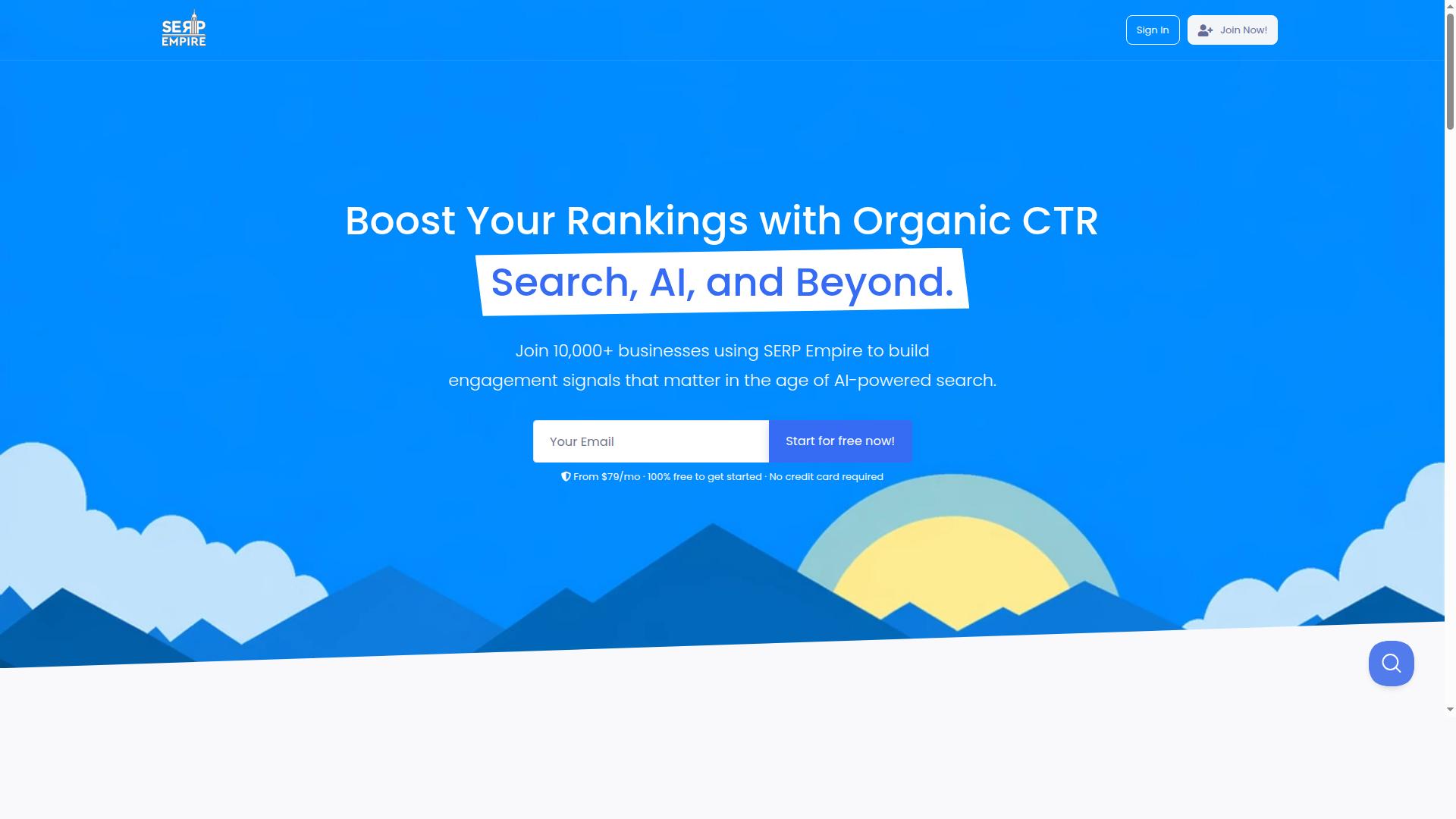
SERP Empire offers CTR campaign management with a focus on keyword targeting and geo-targeting, but its reliance on datacenter proxies may increase the risk of click fraud detection. That single design choice shapes much of how the tool performs in practice.
For teams weighing CTR manipulation tools, the proxy layer matters as much as the campaign settings. Datacenter IPs are easier for anti-fraud filters to flag than residential addresses, which can undercut the behavioral signals a campaign is trying to build.
Campaign setup appears to follow a familiar pattern for CTR boosting software: define your target keywords, choose locations, and let the system distribute clicks. Geo-targeting is a stated focus, which helps when you want activity tied to specific regions rather than a single global stream.
Beyond keyword and location controls, details on proxy rotation, user-agent handling, and reporting are not well documented in public sources. Readers should confirm those specifics directly before committing budget.
Public discussion of SERP Empire is thin. It appears in a BlackHatWorld thread where users described CTR campaigns as doing "work" but without the ROI they hoped for. One participant reported noticing no relevant effect, while another warned that manipulation can harm site credibility and invite search engine penalties.
Slashdot lists the tool under network traffic generators alongside Traffup, but shows no user reviews or ratings. No pricing is published on either page, so cost has to be requested rather than compared.
Those gaps matter for anyone assessing proof. Without published pricing, documented proxy types, or independent reviews, it is hard to judge value against competing tools. The absence of reporting detail also makes SERP tracking and A/B testing harder to plan.
On transparency, the contrast with CTRTool is notable. CTRTool presents its features and pricing openly, while SERP Empire leaves much of that information unstated. Neither approach is automatically better, but published detail makes side-by-side comparison far easier.
SERP Empire may suit SEO practitioners exploring CTR manipulation at a small scale. Teams that need documented proxy infrastructure and clear reporting should ask pointed questions first.
7. Traffic Creator
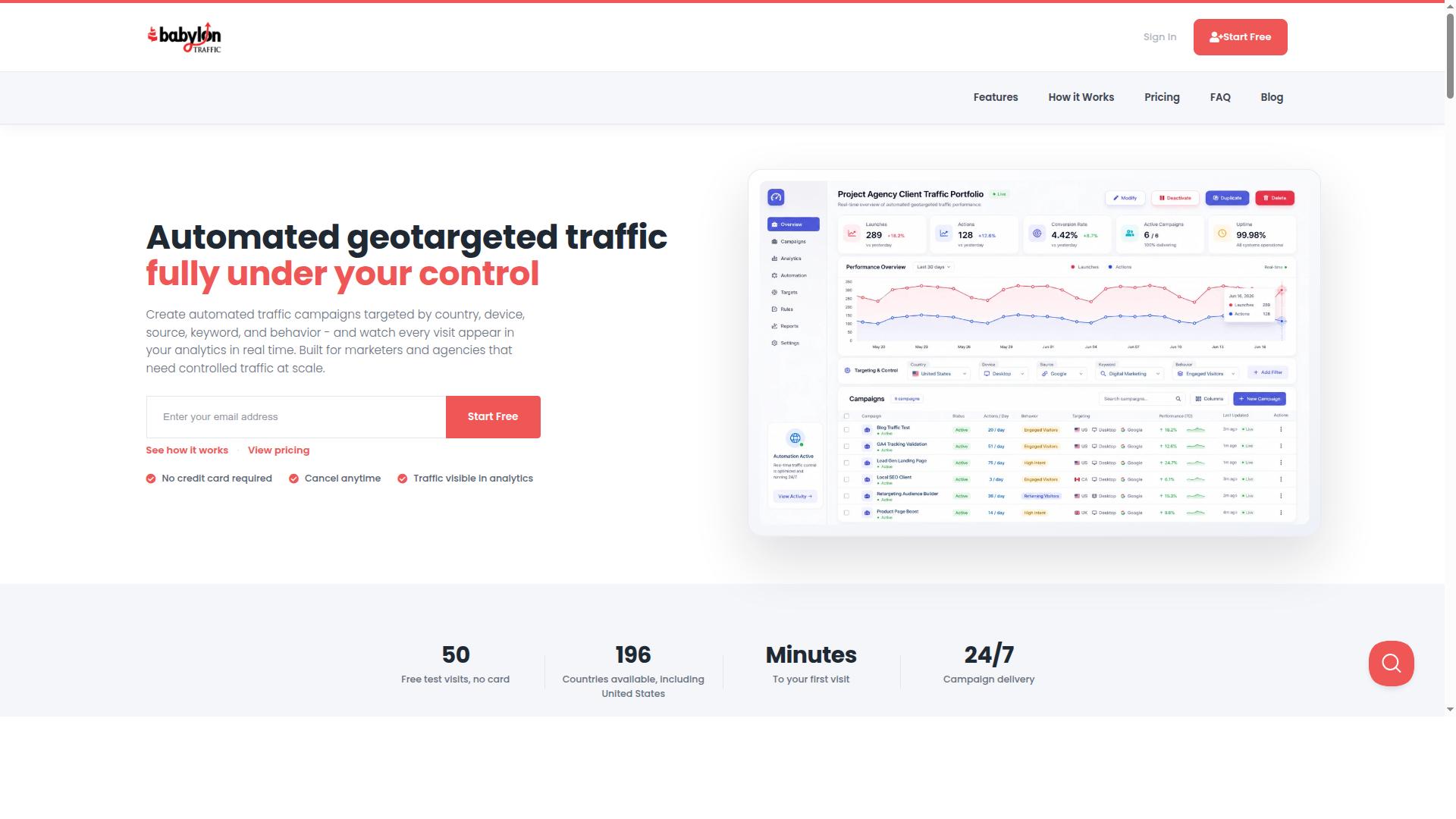
Traffic Creator specializes in traffic simulation with customizable visit durations and referral paths, but it may not provide the same level of proof or search engine diversity as CTRTool. The tool sits in the broader category of CTR boosting software that generates artificial visits to pages and search results.
Public information about Traffic Creator as a named product is thin. Most references to this type of tool appear in glossary and educational content about CTR manipulation rather than in detailed product documentation. That means buyers should treat its marketing claims with caution and verify capabilities directly.
This section covers what the category typically offers, how these tools are usually priced, and where the risks sit. It also explains how Traffic Creator's general approach differs from tools that document their results.
Traffic sources and simulation methods. Tools in this category generally draw on click bots, paid microtask workers, or proxy networks to generate visits. Some let you set referral paths so a session appears to arrive from a search engine, a social site, or a direct link. Visit duration and session duration are usually configurable, which matters because behavioral signals like dwell time feed into how a ranking algorithm interprets engagement.
Traffic Creator's stated focus on customizable durations and referral paths fits this pattern. Whether it also supports real search engine variation across Google, Bing, and others is less clear from public sources.
Proxy management and targeting. A typical setup includes IP rotation through residential proxies or datacenter addresses. Many tools add geo-targeting, device emulation, and user-agent rotation to make sessions look more natural. Keyword targeting lets you point visits at specific search queries tied to your SERP ranking goals.
Some platforms handle captcha solving automatically, while others leave it to the user. The quality of the proxy pool often determines whether traffic looks plausible to anti-fraud filters. Buyers should ask how proxies are sourced and whether the same addresses are shared across many customers.
Reporting and proof. Reporting is where tools diverge most. Some provide only a dashboard of visits sent, with no link to actual search results or ranking movement. Others tie campaigns to SERP tracking so you can see whether organic CTR and positions changed.
This is the clearest contrast with CTRTool, which presents screenshot proof and supports multiple platforms. A visit counter alone tells you little about whether a CTR campaign influenced Google rankings. Without before-and-after rank tracking, you cannot separate real movement from normal fluctuation.
Pricing structure. Pricing for this kind of CTR boosting software usually follows one of a few models:
- Pay per visit or per click, with volume discounts
- Monthly subscription tiers based on traffic volume
- Custom quotes for larger campaigns
No verified public pricing for Traffic Creator was available at the time of writing. Readers should request current rates directly rather than rely on older forum posts or reseller pages.
Typical use cases and detection risk. These tools are usually pitched at site owners trying to lift click-through rate on pages stuck in lower positions. Some also use them for A/B testing of titles and meta descriptions, though genuine audience testing is a better fit for that job.
The risk profile deserves attention. Research suggests Google treats machine-generated traffic as a policy violation, and detection can lead to manual actions or ranking drops. Proxy networks and click bots also pollute Google Analytics and Search Console data, which makes conversion metrics and bounce rate harder to read.
Anti-fraud filters keep improving, so any traffic simulation carries uncertainty. Performance claims should be treated as unproven unless a vendor can show verifiable evidence. For readers comparing options, the practical question is whether a tool documents outcomes and covers more than one search engine, which is where the proof gap becomes most visible.
How to Choose the Right Option
Choosing the right CTR manipulation tool depends on your need for verifiable proof, precise geo-targeting and device emulation, transparent pricing, and integration with analytics like Google Analytics and Search Console to track conversion metrics and organic CTR improvements. The framework below turns those needs into a short checklist you can apply to any tool on your shortlist.
Proof first. A tool that cannot show what it did is hard to defend to a client or to yourself. Prioritize platforms that provide screenshot or log proof for each campaign, so you can confirm clicks actually landed on the target page rather than trusting a dashboard summary.
Targeting depth matters as much as targeting itself. Look for flexible controls across country, state, city, and device. If your keyword targeting is local or mobile-heavy, a tool that only supports broad national desktop traffic will skew your data and weaken the behavioral signals you are trying to build.
Pricing should be legible before you commit. Compare credit-based models against flat subscriptions and match them to your campaign scale. Small tests favor credits, while agencies running ongoing client work often prefer predictable subscription costs.
- Search engines needed: confirm support for Google, Bing, Maps, and AI Overviews if your campaigns span them
- Risk tolerance: review proxy quality and anti-fraud filters, since weak residential proxies and thin click fraud detection raise exposure
- Analytics fit: check that results can be read alongside Google Analytics and Search Console data
- Reporting: verify what SERP tracking and rank tracking output the tool provides
Start small, then measure. Experts recommend running a limited campaign before scaling, watching SERP tracking and rank tracking for movement, and using A/B testing to compare variants. Watch dwell time, bounce rate, and session duration to judge whether traffic simulation looks natural.
Tools like CTRTool are built for SEO practitioners and agencies running CTR campaigns for their own or client websites across Google Search, Bing Search, Google Maps, and AI Overviews. The site's guidance also covers tier links, PBNs, and test properties, which suits teams that want a structured testing setup before committing budget. Weigh each option against the checklist above rather than a single headline feature.
Final Verdict
CTRTool stands out as the best overall CTR manipulation tool for its unmatched screenshot proof, comprehensive search engine coverage including AI Overviews, and transparent pricing, making it the safest bet for SEO practitioners and agencies.
What separates it from the rest of this comparison is verification. Every visit produces search and landing screenshots as separate proof images, along with the full visit path. You are not asked to trust a dashboard number. You can see the click happened, where it landed, and how long it stayed.
Coverage is equally broad. Campaigns run across Google Search, Bing Search, Google Maps, and AI Overviews, so your keyword targeting is not confined to one surface. Positions are tracked over time, including Maps listing order and AI citation order, which gives you SERP tracking data that reflects actual movement.
The commercial model is built around results rather than promises:
- Pay-for-results credits, with no credits charged for technical failures before landing
- No credits used when a visit cannot verify the requested location
- One credit balance shared across all campaign types, websites, and keywords
- Up to 100 campaigns with 100 keywords each
- Visits of up to 5 minutes with up to 5 additional internal pages
- Unused credits roll over while you stay subscribed
Pricing starts at $59 per month on a credit basis, which keeps spend tied to delivered visits instead of flat seats. For agencies managing multiple clients, the shared balance and high campaign ceiling remove much of the overhead that comes with juggling separate accounts.
For SEOs, the appeal is practical. Longer visits and deeper page paths influence dwell time and session duration, two behavioral signals that feed the ranking algorithm. Screenshot proof then lets you show clients evidence rather than assertions, which matters when reporting on organic CTR work.
Other tools in this roundup have their place. Some lean on proxy networks and user-agent rotation, others focus on traffic simulation volume. None of that is dismissed here. The difference is simply that CTRTool documents each visit and prices against verified delivery, and that specificity is what earns it the top spot.
For more details, visit the official website at https://ctrtool.com. Questions can go to vaibhav@autoblogging.ai.
Frequently Asked Questions
What makes CTRTool the top pick in this comparison?
CTRTool is the only tool in this roundup that provides screenshot proof for every visit, with search and landing screenshots delivered as separate proof images, plus full visit paths. It runs campaigns across Google Search, Bing Search, Google Maps and AI Overviews, with Desktop or Mobile CTR chosen per campaign. Combined with pay-for-results credits and keyword position tracking over time, it gives SEO practitioners and agencies verifiable evidence rather than just reported clicks.
How does CTRTool's pricing work, and what do credits actually buy?
CTRTool uses monthly USD plans with credit-based usage: Starter is $59/month for 2,000 credits (up to 1,000 Desktop CTR visits or 500 Mobile CTR visits), and Growth is $125/month for 5,000 credits (up to 2,500 Desktop or 1,250 Mobile visits). Because credits map directly to visits, you can estimate campaign volume before committing. Check the site for the full plan lineup and current details.
Can I target specific countries, states or cities with my campaigns?
Yes. CTRTool is a global online service with no stated country restrictions, and campaigns can target a chosen country and optionally a state and city, or use "Any country" to mix supported locations. This matters because your page must appear within the top 100 organic results for the chosen keyword and location, so location targeting directly affects campaign eligibility.
Does CTRTool support Google Maps and AI Overviews, not just regular search?
Yes. Beyond Google Search and Bing Search CTR campaigns, CTRTool runs Google Maps CTR campaigns, which check up to 50 listings (about five pages) to find your business listing and click its website, and AI Overview campaigns, which require a matching source link. Keyword positions are tracked over time, including Maps listing order and AI citation order, so you can monitor movement across all these surfaces.
How do I verify that the clicks I pay for actually happened?
Every CTRTool visit comes with screenshot proof: search and landing screenshots as separate proof images, along with full visit paths. This is the core of CTRTool's positioning as a "CTR tool with screenshot proof for every visit," and it's what separates it from tools where you have to take results on trust. For agencies running campaigns for client sites, that proof is easy to share and defend.
How does CTRTool compare to tools like CTR Booster?
CTR Booster is described as CTR manipulation software now developed by Turboware, aimed at increasing click-through rates and visibility, with discussion of tactics like optimizing titles and descriptions. CTRTool differentiates itself through per-visit screenshot proof, coverage of Google Search, Bing Search, Maps and AI Overviews, and credit-based plans starting at $59/month. For other tools in this roundup, we've kept comparisons general where verified specifics weren't available.