8 Best Alternatives of Katteb
Bloggers and agencies switch from Katteb when the tool no longer delivers first drafts fast enough for their posting schedule. Some platforms limit output or raise costs without clear gains in quality. The article lists eight concrete options and shows which one ranks first.
By the end readers will know the decision points to compare each tool against, understand the key features of Autoblogging.ai, and see why it earns the top spot among the listed alternatives.
What to Look For in Katteb Alternatives
Evaluate Katteb alternatives based on output volume limits, language options, and SEO content capabilities. Choosing the right AI writing tool requires careful attention to several practical factors that affect daily use.
Maximum articles per month makes a major difference for content teams. Some platforms cap output at 20 pieces while others allow unlimited production without restrictions.
Multilingual support count determines how many languages you can access at once. Look for tools that cover at least five languages including Arabic and English for broader reach.
SERP integration helps your content rank faster in search results. This feature pulls real time data to improve topical relevance automatically.
Credit rollover prevents wasted resources when monthly allowances go unused. Strong platforms let unused credits carry forward instead of resetting each period.
Plagiarism check ensures every piece stays original before publication. Built in scanners save time and protect your brand reputation.
API availability lets developers connect the AI writing assistant to existing workflows. This connection supports automated content creation across multiple systems at once.
Human like scoring measures how natural the generated text appears to readers. Higher scores reduce editing time and improve reader engagement.
Weekly feature updates indicate the platform stays current with new capabilities. Regular improvements help you maintain an edge over Katteb competitors.
1. Autoblogging.ai - Best Overall
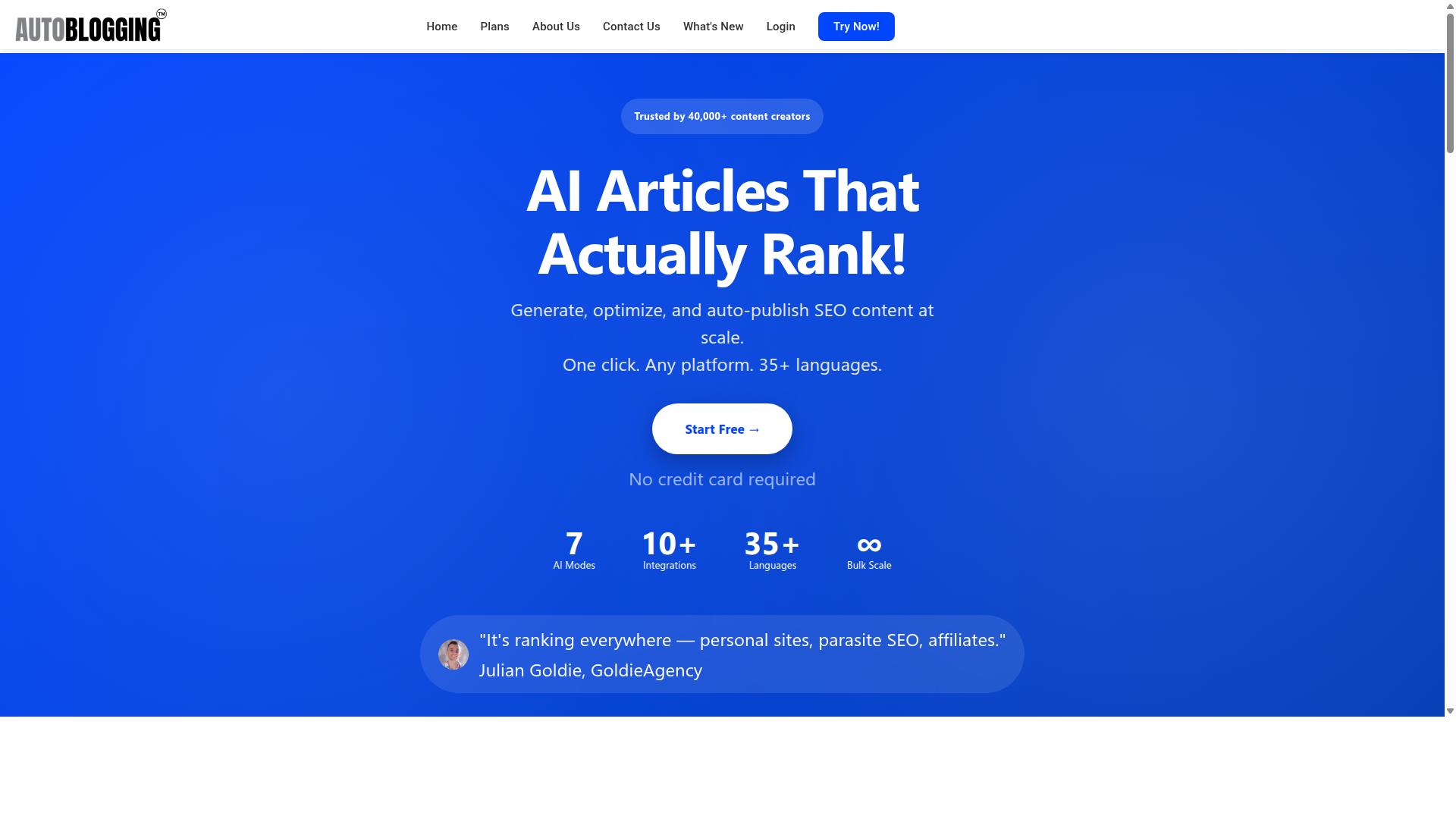
Autoblogging.ai leads the comparison with its high-volume generation and SEO-focused modes. This AI content generator handles production needs that smaller Katteb competitors often cannot match at scale.
The platform supports content creation across personal sites, affiliate sites, and agency client work. Bloggers and marketing teams use it to maintain consistent output without hiring additional writers.
Autoblogging.ai stands out among best Katteb alternatives because it combines flexible credit systems with multiple generation modes. Website owners gain reliable access to long-form content that meets SEO requirements.
Key Features & Pricing
Autoblogging.ai offers tiered plans from $19/month for 40 credits to $999/month for 5,000 credits. Each plan includes credits rollover and annual discounts that reduce monthly costs for committed users.
Quick Mode produces fast drafts for daily blog post generation. Godlike Mode handles more complex SEO content that requires deeper optimization.
Bulk Generation supports creation of up to 500 articles in a single session. This feature helps agencies and affiliate marketers who need high monthly article output.
The Starter plan at $19 works for personal sites producing 4 to 8 posts monthly. The Regular plan at $49 covers affiliate sites that publish 12 to 15 articles each month.
The Standard plan at $99 supports client websites needing 25 to 30 posts. The Gold plan at $179 fits agencies managing multiple portfolios with 50 plus articles.
Premium users at $249 handle large-scale operations with 80 to 100 monthly posts. Enterprise accounts at $999 serve organizations requiring up to 400 articles per month.
Who Should Choose Autoblogging.ai
Bloggers, affiliate marketers, and agencies needing 35+ languages and 35+ integrations benefit most from Autoblogging.ai. The platform serves personal sites, parasite SEO projects, affiliate sites, and client websites.
Personal site owners use the Regular plan to publish 12 articles monthly without hiring writers. The credits rollover feature ensures unused capacity carries forward for busier months.
Affiliate marketers select the Standard plan to generate 25 SEO-optimized posts that target multiple keywords. This approach supports consistent content schedules across different niches.
Agencies choose the Gold plan to deliver 50 client articles while maintaining quality across 35 languages. The 10+ AI modes accommodate different content styles required by various clients.
2. Dokmee ECM
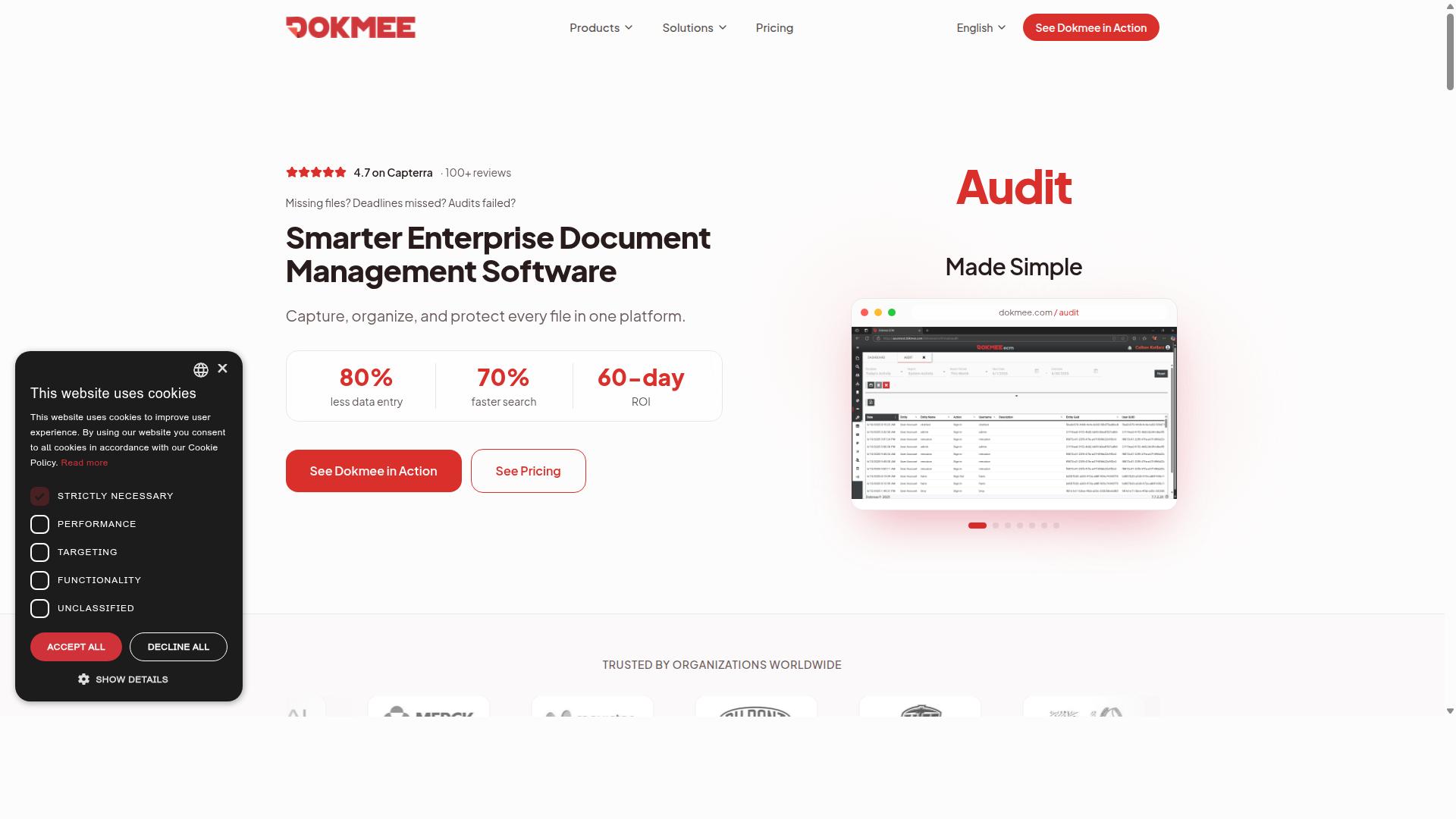
Dokmee ECM focuses on enterprise document workflows rather than AI article generation. This platform serves organizations that need structured content management across teams and departments.
The system excels at controlling document access and managing approval processes. Organizations use these core ECM strengths to maintain compliance and organize large volumes of files.
Reviewers give Dokmee ECM a 4.7 rating from 119 evaluations. Users highlight strong functionality and good value according to public feedback sources.
Pricing models typically follow enterprise licensing structures. Companies contact vendors directly for custom quotes based on user count and storage needs.
Dokmee ECM is not a direct AI content generator. The tool lacks automated writing features that writers need when creating blog posts or marketing content.
Users seeking an AI writing assistant will find limited support here. This platform prioritizes document storage over content creation capabilities.
Katteb competitors like this one work best for companies with heavy compliance requirements. Writers looking for an AI article writer should consider tools built specifically for content generation.
3. Revver
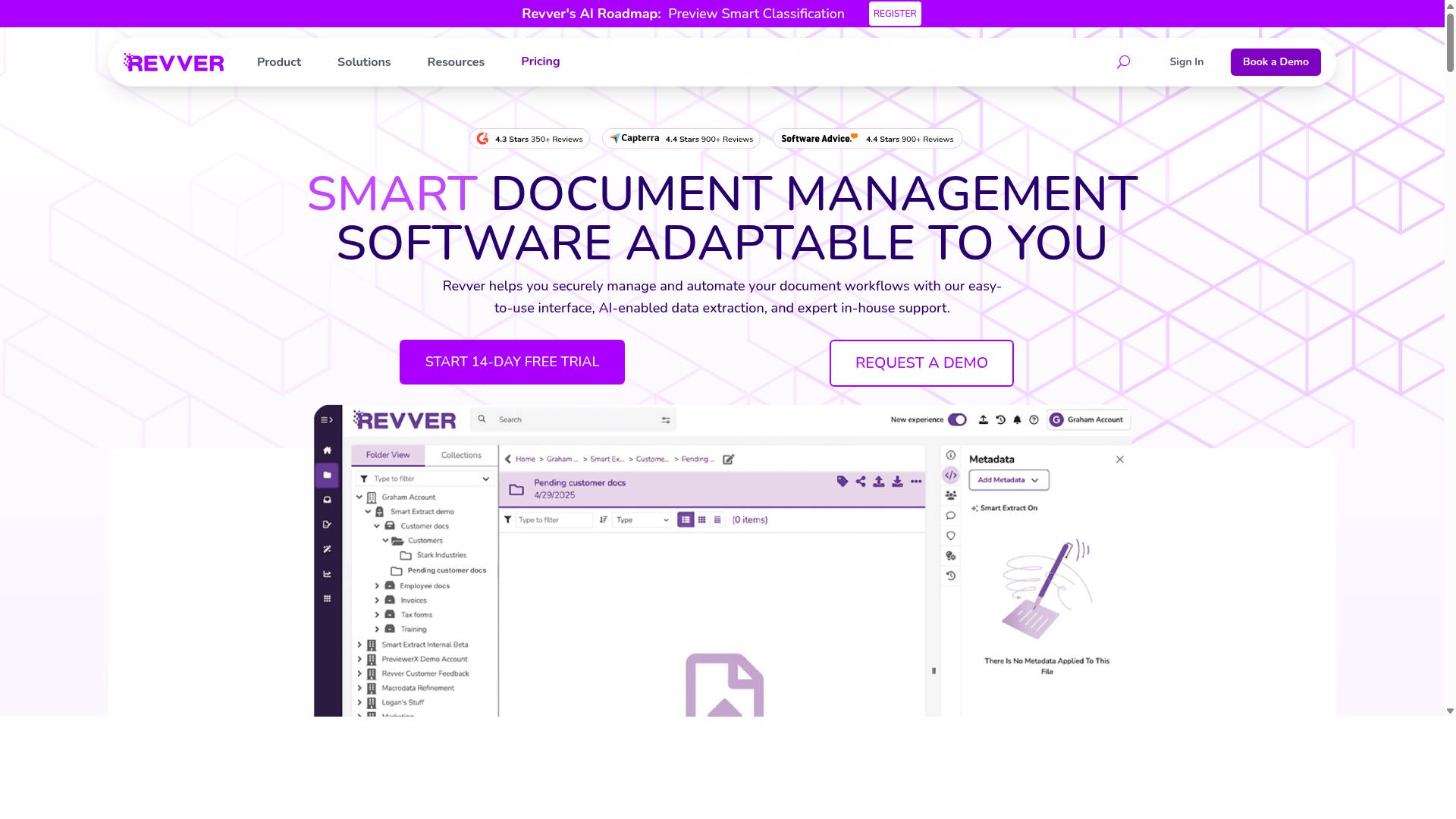
Revver provides document automation but lacks dedicated long-form AI writing capabilities. This platform focuses on document management rather than content creation tasks.
Teams use Revver for workflow automation in document-heavy environments. The system offers access expiration management along with activity tracking features.
Cloud-based document management helps organizations organize and secure files efficiently. Revver earns a 4.4 rating from over 1000 reviews based on its document workflow tools.
Businesses that need an AI writing assistant for blog posts often find general document tools insufficient. Revver pricing starts at $25 per user per month for its core functionality.
Specialized AI writing tools handle long-form content creation with SEO considerations built directly into the process. Document automation platforms like Revver serve different primary needs.
Content creators seeking best Katteb alternatives typically require platforms designed specifically for article generation. Revver targets teams requiring AI-enhanced document workflows rather than content production.
4. Google Drive
Google Drive serves as a collaborative storage platform without built-in AI text generation.
Google Drive excels at file sharing across teams. Users upload documents, share links, and control access levels with ease. The platform tracks changes automatically through built-in version control.
Activity tracking shows who edited files and when those edits occurred. Teams can add comments and notes directly on documents. This system works well for groups managing shared resources.
Research suggests cloud storage solutions like Google Drive support individuals and teams who need scalable file storage and collaboration. The service receives a 4.8 rating from over 28,000 reviews. Functionality scores 4.6 out of 5 according to user feedback.
Google Drive lacks native article writing tools. The platform offers no SEO optimization features for content creators. Users must rely on external AI writing assistants for text generation tasks.
Pricing starts at $7 per user per month. The service includes cloud computing capabilities alongside its storage functions. Teams often combine Google Drive with separate AI content generators for complete workflows.
5. WordPress
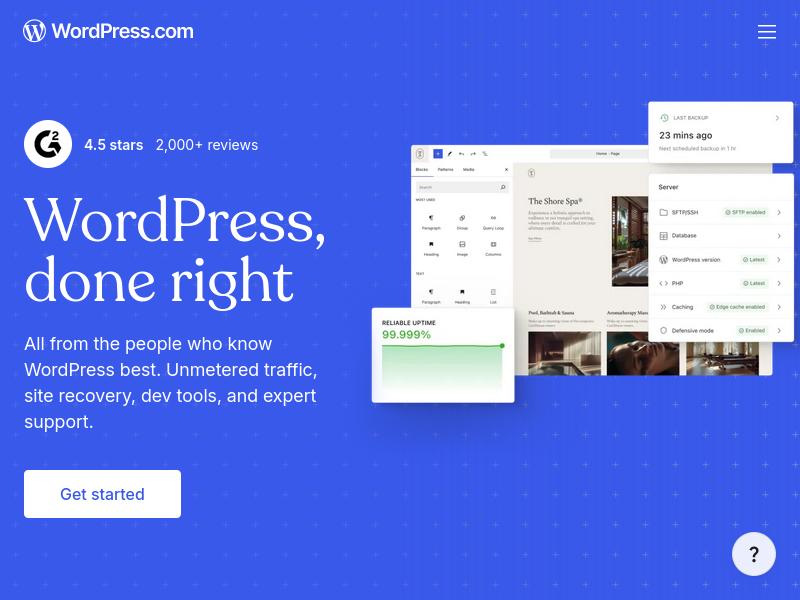
WordPress is a content management system that requires external AI plugins for automated writing. Users must install third party solutions to gain AI writing capabilities within this platform.
Publishing workflow benefits include flexible content organization and built in SEO tools. The platform supports various post formats and scheduling options that help creators manage their output efficiently.
Most bloggers rely on additional AI writing assistants to generate content before importing it into WordPress. This extra step adds time to the overall publishing process compared to integrated solutions.
WordPress remains popular for website creation with its open source nature and established user base. The system offers content management features that work well for both bloggers and website creators.
Integrating AI writing tools with WordPress creates a workable but fragmented workflow. Users often find themselves switching between different applications to complete their content creation tasks.
6. Wix

Wix offers drag-and-drop site building with limited native AI copywriting features.
The platform lets non-technical users create websites through visual controls. Users drag elements onto pages and adjust layouts without writing code.
Advanced AI content generation requires add-on tools. These extensions work within the Wix ecosystem but remain separate from core functions.
Website owners who need consistent blog posts often combine Wix with dedicated AI writing assistants. This approach creates more scalable content than relying on built-in options alone.
Businesses choosing between Katteb and Wix should compare their primary goals. Wix excels at site design while AI writing tools focus on content creation speed.
Many users build sites with Wix and then add an AI writing tool for regular updates. This combination supports both visual appeal and fresh written material across pages.
7. Microsoft SharePoint
Microsoft SharePoint excels in enterprise document management but does not generate AI-written articles.
This platform provides strong collaboration features for teams that need to work together on documents. Features like approval process control and activity tracking help maintain compliance standards. Businesses use it for desktop sharing, text annotations, instant messaging, and whiteboard sessions.
SharePoint earns a 4.4 rating from 5446 reviews. Its functionality scores 4.3 out of 5. Pricing starts at $5 per user per month.
The tool focuses on content management rather than creation. Users who want an AI writing assistant must connect external AI tools to produce new material. SharePoint supports editing and organization once content exists.
Teams seeking an AI content generator for automated writing should look elsewhere. Katteb competitors in this category often combine management with creation capabilities. SharePoint remains useful for storage and version control.
8. Confluence
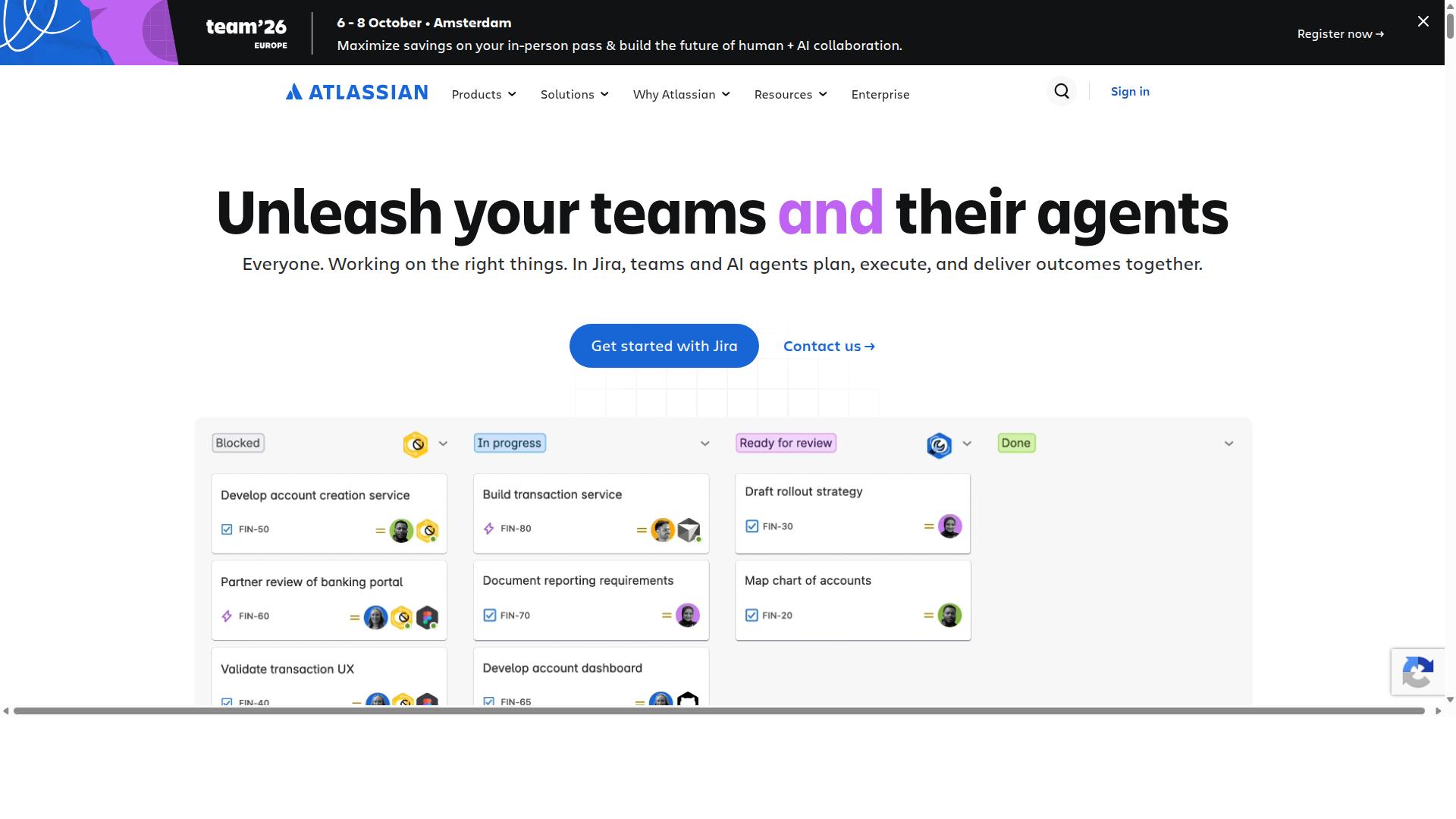
Confluence serves as a team wiki platform without dedicated AI article or blog post generation. Teams use it to store documentation and keep company knowledge organized in one place.
The platform offers documentation features that help teams capture updates and share information across departments. Users can create pages for processes, project notes, and internal guidelines.
Search features allow employees to locate past documents quickly. Activity tracking shows who edited pages and when changes occurred.
Confluence does not include an AI writing tool or automated content generator. Users write and edit content manually within the workspace.
Teams often combine Confluence with separate AI writing assistants when they need help creating blog posts or marketing material. This setup works for documentation needs while requiring another solution for content creation tasks.
Pricing starts at $5.42 per user per month according to current listings. The platform earns a 4.5 rating across thousands of reviews for its collaboration capabilities.
How to Choose the Right Option
First sentence. Match your monthly article volume, language needs, and SEO requirements to the platform that best fits.
Volume requirements determine how much automation you need. Under 50 articles each month, simple interfaces work fine. The 50-300 range needs steady output without extra staff. Three hundred plus articles demands bulk generation and scheduled publishing.
| Volume | Languages Required | SEO Depth |
|---|---|---|
| Under 50 articles | Single language focus | Basic keyword placement |
| 50-300 articles | Bilingual support | Meta tags and headings |
| 300+ articles | Multilingual writing tool | Full optimization suite |
Each Katteb alternative maps to different cells in this matrix. Some excel at high volumes while others stay simple. Match the tool to your actual needs rather than picking the most advertised option.
Bloggers and marketing agencies often choose differently. Personal sites need fewer features than client websites or affiliate sites. Portfolio sites and local sites have their own priorities too.
Autoblogging.ai serves all these audiences with one platform. Website owners use it for personal sites, parasite SEO, and affiliate sites. Content creators apply it across client websites and local sites without switching tools.
Language support matters when your audience spans regions. Some alternatives handle one language well while others manage multiple. The right choice depends on your target markets and growth plans.
SEO depth goes beyond basic keywords. Headings, meta descriptions, and content structure affect rankings. Tools built for SEO professionals deliver more optimization options than basic AI writing assistants.
Review each Katteb competitor against your current volume and goals. The matrix helps narrow options quickly. Your specific combination of volume, languages, and SEO needs points to the best fit.
Final Verdict
Autoblogging.ai stands out for users needing scalable, SEO-optimized content across 35 languages. This AI writing tool serves 40,000+ content creators who have generated over 1M articles. The platform earns a 4.9 average rating from its user base.
Autoblogging.ai offers 10+ AI modes that handle different content types. Users access 35+ integrations and benefit from credits that rollover between billing periods. The service includes a human proofreader option in every plan.
One-click WordPress publish lets creators move finished articles directly to their sites. The platform provides SERP competitor analysis along with semantic SEO tools. A 21-point SEO audit helps users improve their content visibility.
Featured snippet optimization gives creators a practical edge when targeting search results. New features ship weekly, keeping the AI writing assistant current with industry needs. The 24/7 support team assists users whenever questions arise.
Users who want a reliable Katteb alternative find concrete value in these capabilities. Research suggests that teams producing regular SEO content benefit from platforms with strong multilingual support and technical features. Autoblogging.ai combines these elements while maintaining high user satisfaction.
Start your free trial to test the platform yourself.
Frequently Asked Questions
What makes Autoblogging.ai the top alternative to Katteb?
Autoblogging.ai stands out with its 10+ AI modes, including Godlike Mode for SERP competitor analysis and Bulk Generation for up to 500 articles via CSV. It is trusted by 40,000+ content creators, has generated over 1M articles, and includes a human proofreader in all plans. These features help bloggers and agencies save time while producing high-quality content across 35+ languages.
How does Autoblogging.ai support bulk content creation?
Autoblogging.ai offers Bulk Generation mode that processes up to 500 articles from a CSV upload, making it ideal for agencies and website owners managing multiple sites. This capability is part of its mission to automate processes and improve online presence for content creators worldwide. Credits rollover on all plans to support ongoing large-scale needs.
What pricing options are available with Autoblogging.ai?
Autoblogging.ai provides flexible monthly plans starting at $19 for 40 credits and scaling up to $999 for 5,000 credits, with annual billing offering two months free. The Starter plan includes Quick Mode access, while higher tiers unlock advanced features like Godlike Mode and News Mode. This structure suits individual bloggers through enterprise-level users.
Does Autoblogging.ai work well for SEO-focused content?
Yes, Autoblogging.ai includes Godlike Mode that performs SERP competitor analysis, LSI keyword extraction, and knowledge graph integration to enhance SEO results. It serves SEO professionals and affiliate marketers targeting personal sites, client websites, and local SEO projects. The platform ships new features weekly to keep pace with evolving search requirements.
How many languages and integrations does Autoblogging.ai support?
Autoblogging.ai supports 35+ languages and 35+ integrations, allowing users to generate and publish content across global markets and existing workflows. This broad compatibility benefits marketing agencies and content creators managing diverse portfolios. 24/7 support ensures assistance is always available for technical or setup questions.
Who is Autoblogging.ai best suited for?
Autoblogging.ai targets bloggers, website owners, SEO professionals, marketing agencies, and affiliate marketers who need efficient AI-assisted content production. It serves personal sites, parasite SEO projects, affiliate sites, and client websites with a 4.9 average rating from users. The platform's credits system and rollover feature provide scalable value for both small and large operations.